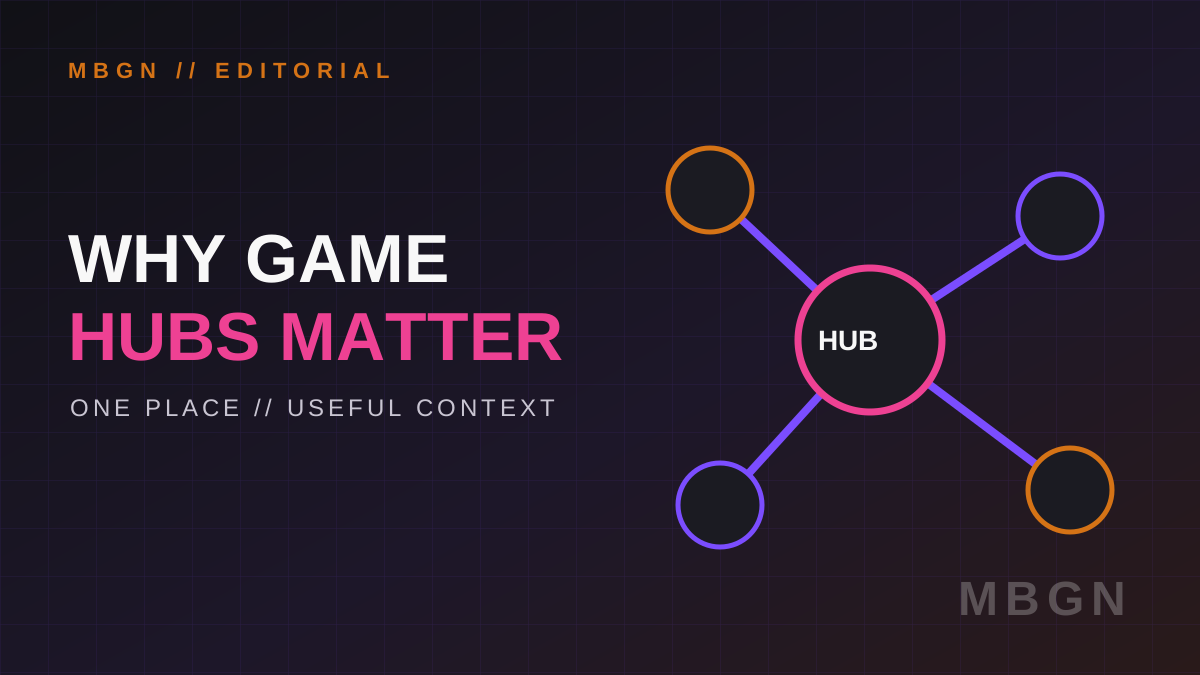
A gaming homepage is a useful front door and a terrible filing cabinet. News moves. Guides age at different speeds. Reviews answer one kind of question while a beginner guide answers another. Without structure, the useful page a player found last month disappears beneath whatever was published this morning.
Game hubs are MBGN’s answer: one durable route that explains the game, shows the state of coverage and connects the pages a player is likely to need next.
A hub begins with orientation
Every useful game hub should answer five questions quickly:
- What kind of game is this?
- Who develops or publishes it?
- What platforms and development status are officially confirmed?
- Why does MBGN follow it?
- Where should a new reader go next?
That overview should not become a copied store description. MBGN summarizes the game in original language and links the official page for claims that can change.
The The Isle hub, for example, points readers toward beginner survival, growth, combat, performance and buyer guidance. The GTA VI hub keeps Rockstar-confirmed details separate from the pre-launch questions we are watching.
Hubs stop guides from becoming islands
A guide can solve one immediate problem while leaving the reader without context.
Someone reading an FPS guide may also need beginner survival help once the game runs smoothly. A new dinosaur player may need growth advice after surviving the first hour. Internal links should follow that journey instead of sending every reader back to the homepage.
A game hub makes those relationships visible:
- beginner guide → game hub,
- game hub → advanced guide,
- advanced guide → buyer checklist,
- official update → hub status,
- comparison article → both relevant hubs.
Good internal linking is editorial, not mechanical. The link should answer the reader’s likely next question.
Hubs make updates safer
Current games change. A patch may alter a roster, a release date may move or a platform may be announced.
Without a hub, the same fact can be repeated across many pages and become inconsistent. A hub provides a clear source-of-record page for the current snapshot, while evergreen articles avoid unnecessary volatile detail.
That does not eliminate maintenance. It makes maintenance easier to see.
Hubs separate coverage from hype
An endless news feed rewards constant novelty. A hub rewards usefulness.
If nothing official changed, the GTA VI hub does not need a filler post. If an Evrima balance patch changes exact mechanics, MBGN can update the relevant guide and note the date rather than publishing “everything changed” for attention.
The result should feel calmer:
- official claims remain sourced,
- rumors remain labeled or omitted,
- guides focus on decisions,
- and readers can tell what coverage actually exists.
What a hub should not become
A game hub is not:
- a copied wiki,
- an SEO page repeating the title twenty times,
- a list of dead links,
- a promise of coverage that never arrives,
- or a place to hide unreviewed drafts.
If MBGN has only one useful article about a game, the hub should say so honestly. Coverage can grow after the library does.
A static-first advantage
MBGN builds hubs and articles as static pages. That keeps navigation fast, makes links durable and avoids requiring a database or account system.
Content collections provide consistent metadata—title, summary, tags, dates, sources and publishing status—while the hub remains a normal page generated at build time. Draft collections are not queried by public routes.
This structure is simple enough to migrate and strict enough to stop an incomplete draft from quietly becoming public.
How MBGN should choose the next hub
Not every mentioned game needs a hub immediately. A strong candidate should have at least two of these:
- multiple useful guides,
- recurring official updates,
- a review or buyer guide,
- a meaningful comparison with another covered game,
- or sustained interest from the MBGN audience.
Creating empty hubs for dozens of games would reproduce the same filler problem in a new shape.
The long-term role
As MBGN grows, game hubs should become the stable layer beneath the magazine:
- the homepage shows what is new,
- section pages organize by format,
- articles solve one problem,
- and hubs preserve the bigger picture.
That is why they matter. A visitor should not need to remember when an article was published to find it again. They should remember the game, open its hub and continue from there.
Browse the current game hubs, or start with the guide library if you already know the problem you want to solve.